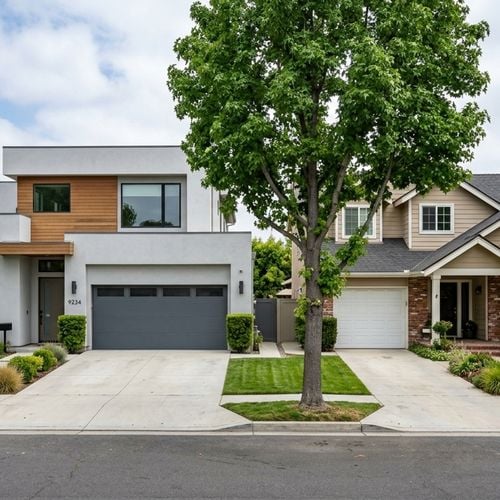
The median sale price for a home in Cypress, CA sits at roughly $1,099,000 as of mid-2026. Many first-time home buyers in Cypress spend months focused on saving a down payment for a million-dollar purchase - and then discover, often too late, that the cash needed to actually close is a different number entirely.
Closing costs cover the administrative, legal, and lending fees required to transfer property ownership. Knowing how these fees break down in Orange County lets you budget accurately and avoid a scramble in the final days of escrow.
Understanding the Basics of Closing Costs
Buyers in Cypress face a competitive market where homes spend about 36 days on the market before selling. Moving quickly requires having your funds ready - which means you need to understand the difference between your down payment and your closing expenses before you're ever in contract.
The down payment goes directly toward your home's equity. Closing costs pay for the services that make the transaction happen: appraisals, title searches, loan origination, and the rest of it. They're separate buckets, and you need both filled.
Both buyers and sellers carry their own set of closing costs. In California, local county customs dictate who pays for specific title and escrow fees, so the split in Orange County differs from how things work in Northern California.
Closing costs versus your down payment
Your down payment is a percentage of the total purchase price paid upfront. Lenders subtract that amount from the sale price to determine your loan amount.
Closing expenses are separate, one-time fees paid at the end of the escrow period. Budget for both distinct amounts when you're reviewing your finances - they don't overlap.
Buyer costs versus seller costs
Sellers typically pay the real estate agent commissions and the county documentary transfer tax. Buyers cover the costs tied to securing their mortgage and funding their escrow reserves.
Some fees, like the escrow company's service charge, are split. We'll get into the exact Orange County customs for that below.
Average Buyer Closing Costs in Orange County
Buyer closing costs in California usually average between 2% and 5% of the home's purchase price. If you strip out prepaid items like taxes and insurance, some data sources put that average closer to 1% to 2.1%.
On a median-priced Cypress home at $1.1 million, a 2% to 5% range means you should expect to bring between $22,000 and $55,000 to closing. The exact figure depends on your loan type and the property's tax rate. Cash buyers pay considerably less because they skip all lender-related fees - more on that shortly.
Is the 3% rule accurate?
A lot of buyers use 3% as a quick back-of-the-envelope estimate, and for a standard conventional loan in Cypress, it's a reasonable middle ground. If you buy down your rate with discount points, you'll land above 3%. A no-point loan with minimal prepaids might keep you closer to 2%.
It's a useful starting number. Don't treat it as a guarantee.
Why Orange County prices impact your cash to close
Certain fees scale directly with the purchase price - title insurance premiums and loan origination fees both climb as the home's value and your loan amount go up. With Cypress homes frequently selling above $1 million, the dollar amount for closing costs runs higher than the national average. Knowing that early gives you time to have the liquid funds ready when escrow closes.
Closing Cost Estimates by Purchase Price
The Cypress median is near $1.1 million, but condos and townhomes offer lower entry points. Applying the 2% to 5% average helps you get a rough sense of costs across different price points.
These estimates fold in lender fees, title policies, and typical prepaid expenses. Your lender will provide a precise Loan Estimate within three days of your mortgage application - that's the document you'll actually work from.
Sample cost breakdown for California buyers
On a $300,000 property, closing costs range from $6,000 to $15,000. A $400,000 purchase typically requires $8,000 to $20,000 in buyer fees. For a $500,000 home, expect somewhere between $10,000 and $25,000. At $600,000, you're looking at roughly $12,000 to $30,000 in closing expenses.
Calculating your exact cash to close
To find your actual number: add your closing costs to your down payment, then subtract any earnest money deposit you already submitted when your offer was accepted. Your lender lays out that math on the Closing Disclosure, which arrives three days before you sign your final paperwork. That's your last real chance to review the total before you wire.
Breakdown of Common Buyer Fees in Cypress
Cypress buyers pay for several distinct services during the escrow process, and understanding what each fee actually covers makes the whole closing statement a lot less alarming.
The total consists of loan costs, third-party services, and prepaid items. Here's how those expenses break down in Orange County.
Loan origination and appraisal fees
Lenders charge an origination fee to process and underwrite your mortgage - usually between 0.5% and 1% of the total loan amount. You'll also pay for a home appraisal, which confirms the property's market value for the lender. Appraisals in Southern California typically run a few hundred dollars.
Title insurance customs in Southern California
By local custom in Orange County, the seller pays for the Owner's Title Insurance policy - the one that protects your equity against past claims or liens on the property. You, the buyer, pay for the Lender's Title Insurance policy, which is a separate premium that protects the mortgage company's financial interest. Different policies, different payers, same closing table.
Escrow fees and transfer taxes
Escrow companies manage the safe transfer of funds and documents between buyer and seller. In Orange County, it's longstanding local custom for the buyer and seller to split the escrow fee 50/50.
The Orange County documentary transfer tax rate is $1.10 per $1,000 of the sale price. By custom, the seller pays that entire amount, and no Orange County city adds an additional city transfer tax on top.
Prepaid property taxes and insurance
Lenders require you to fund an escrow account for future property taxes and homeowners insurance. Expect to pay a full year's insurance premium upfront, plus several months of property taxes deposited into the reserve account. These prepaids aren't small - they make up a significant portion of your total closing costs and catch a lot of buyers off guard.
Who Pays Which Fees at Closing
Who pays for what comes down to regional tradition, not state law, and Southern California operates differently from other parts of the state.
Everything in a real estate contract is technically negotiable, but sticking to customary splits makes your offer look clean and standard to sellers. Straying from convention can raise questions you don't want raised.
What the buyer customarily covers
You'll cover the lender's title policy, half the escrow fee, and all loan-related charges - appraisal, credit report fees, origination charges. You'll also pay for your own property inspections, though those typically go directly to the inspector early in the process, not at the closing table.
What the seller typically pays
Sellers pay the real estate agent commissions for both sides of the transaction, the owner's title insurance policy, the county documentary transfer tax, and the other half of the escrow fee. If there are delinquent property taxes or existing liens, those get cleared from the seller's proceeds before they see a dollar.
Asking the seller for closing cost credits
Buyers can ask the seller to cover a portion of their closing costs through seller concessions. That's more common when homes have been sitting on the market - but with Cypress currently averaging 36 days on market and nearly half of homes selling above list price, sellers aren't exactly desperate. Lenders also cap how much a seller can contribute, usually between 3% and 6% of the purchase price depending on your loan type.
Talk to your agent about whether concessions make sense before it goes in the offer.
How to Estimate Your Cash to Close
Getting a precise number means looking at your specific loan terms and the home's exact property tax rate. Online tools give you a solid baseline before you apply, and your lender refines the estimate as underwriting moves along.
The type of transaction also matters. How you're financing the purchase changes what you're actually paying for.
Using a buyer closing cost calculator
A California closing cost calculator lets you plug in the purchase price, down payment, and interest rate to see an itemized breakdown. You can adjust the property tax rate to match Orange County averages. These tools are also useful for seeing how a larger down payment affects your total - a bigger loan amount means higher origination fees and a higher lender title policy premium.
What to expect if you pay cash
Cash buyers skip the appraisal, origination fees, and lender's title insurance entirely. You also don't need to fund a lender-mandated escrow account for taxes and insurance. What's left is your half of the escrow fee and any prorated property taxes or HOA dues - a much shorter list.
Ways to Reduce Your Out-of-Pocket Expenses
Closing costs aren't entirely fixed. There's real room to reduce the cash you bring to escrow - through negotiating with the seller, comparing mortgage providers, or structuring your loan differently. Taking time to review your options before you're in contract is when it actually matters.
Negotiating seller concessions
You can write a seller credit directly into your purchase offer. If the seller accepts, they cover a specific dollar amount of your closing costs. In a market where nearly half of homes sell above list price, sellers may simply pass on offers that ask for concessions - so weigh the strategy against how competitive the property is before you go that route.
Shopping for lender credits
Some lenders offer credits toward your closing costs in exchange for a slightly higher interest rate. It reduces your upfront cash but increases your monthly payment - a trade-off worth running the math on. You can also compare Loan Estimates from multiple lenders and look closely at origination fees and third-party processing charges. The differences between lenders add up fast at this price point.
Frequently Asked Questions
How much are average buyer closing costs for a typical single-family home in Cypress, CA?
Buyer closing costs in California usually average between 2% and 5% of the purchase price. On a typical Cypress home priced around $1.1 million, that translates to roughly $22,000 to $55,000. If you exclude prepaid taxes and insurance, the average drops closer to 1% to 2.1%.
Does the city of Cypress charge a local documentary transfer tax to buyers, or just the standard Orange County rate?
No, Cypress doesn't charge an additional city transfer tax. The property is only subject to the standard Orange County documentary transfer tax rate of $1.10 per $1,000 of the sale price. By local custom, the seller pays this tax - not the buyer.
Is it common for sellers to cover buyer closing costs in the current Cypress real estate market?
It depends on the specific property and how long it's been listed. With Cypress homes currently averaging 36 days on the market and nearly half selling above list price, sellers hold strong negotiating power. Asking for concessions is possible, but it may make your offer less competitive on a newly listed home.
Are there hidden HOA transfer fees or Mello-Roos charges I need to budget for when buying in Cypress?
Many Cypress neighborhoods have Homeowners Associations, which often charge a transfer fee when a property changes hands. Review the specific community's HOA documents during your contingency period to see the exact fee and confirm whether the buyer or seller is responsible for paying it.
When do I have to wire the funds for my closing costs during the escrow process?
You'll wire your final funds to the escrow company just before your closing date. The escrow officer will provide exact wiring instructions after you sign your final loan documents - usually a day or two before the transaction officially records.
What happens if the final closing costs on my Cypress home are higher than the initial Loan Estimate?
Lenders must follow federal rules regarding how much certain fees can increase between the initial Loan Estimate and the final Closing Disclosure. If a lender-controlled fee exceeds the legal tolerance limit, the lender must refund you the difference at closing.
Check out this article next