Cypress, CA sits in northern Orange County at an interesting crossroads - agricultural past, modern commercial weight, and a housing market that reflects both. The land went from open rancho territory to dairy farms to a full suburban grid over the course of a single century. Today it functions as a legitimate employment center within the greater Los Angeles metropolitan area, not just a bedroom community. This combination of suburban housing and commercial opportunity factors into the pros and cons of living in Cypress, CA.
Buyers who ask about this area usually want to know how it got here. That's a fair question, and the answer shapes a lot of what you're seeing in the current market. With recent median sale prices around $1.02 million and homes moving in roughly 42 days, the pace isn't accidental - it's the product of decades of deliberate planning and constrained supply.
Early Roots and the Founding of Dairy City
Long before a single subdivision existed here, the Gabrieleno/Tongva Native American tribe inhabited the land. It eventually passed into the vast Spanish and Mexican rancho system - specifically Rancho Los Nietos and Rancho Los Alamitos, both granted to Manuel Nieto and his heirs.
By the late 19th century, dairy farmers had started putting down roots. George Miller, typically called the "Father of Cypress," arrived in 1899 and helped build a dairy industry that would define the area for the next several decades. For a long time, that was the entire local economy.
Incorporation and the Post-War Boom
After World War II, housing demand across Southern California intensified fast, and local farmers could see what was coming. To protect their agricultural interests, residents incorporated on July 24, 1956 - naming the new municipality "Dairy City," which tells you exactly where their heads were at the time.
It didn't hold. Commercial and residential development moved faster than the farms could resist, and the transition from rural pastures to suburban neighborhoods happened quickly enough that today only a handful of historical markers and community names give any hint of those dairy operations.
How the Community Got the Name Cypress
The name predates incorporation by more than sixty years. In 1895, locals formed the Cypress School District to serve a growing farming population - and the district's name came from something you could see from the road.
Early residents had planted rows of cypress trees around the local schoolyard, specifically to block the Santa Ana winds that push through Orange County with real force. That windbreak became the defining visual feature of the area, and the name stuck to the school district long before anyone thought about incorporation.
The 1957 Name Change Vote
Once the community was officially Dairy City, it didn't take long for residents to notice the name no longer fit. By 1957 - just a year after incorporation - they held a straw ballot vote to pick something new, and the obvious answer was already sitting there in the school district's name.
The vote to rename the municipality Cypress passed 208 to 41. It wasn't close. The change acknowledged what everyone could already see: the dairy industry was in decline, residential housing was taking over, and Dairy City was an awkward thing to call a suburb. The name has been Cypress ever since.
Where the City Fits Within Orange County
Cypress sits in the northern part of Orange County, within the Anaheim - Santa Ana - Irvine metropolitan area, which itself falls under the greater Los Angeles Combined Statistical Area. That position gives residents practical access to major employment centers in both counties without necessarily living inside either of the big cities.
The farmland-to-suburb transformation produced a well-planned street grid, and the housing supply has stayed tight. Recent market data shows about 74 active listings and roughly 2.3 months of supply - not a lot of room to be picky.
Local Real Estate Market Conditions
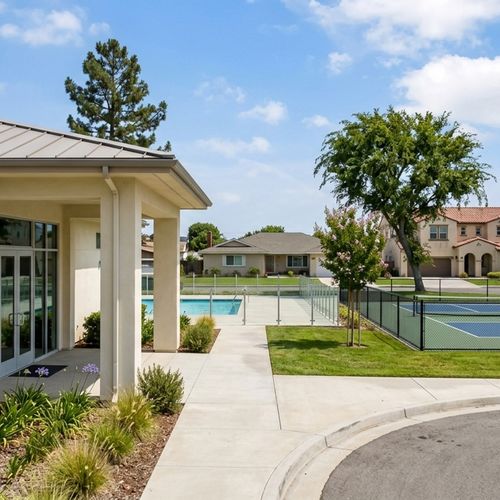
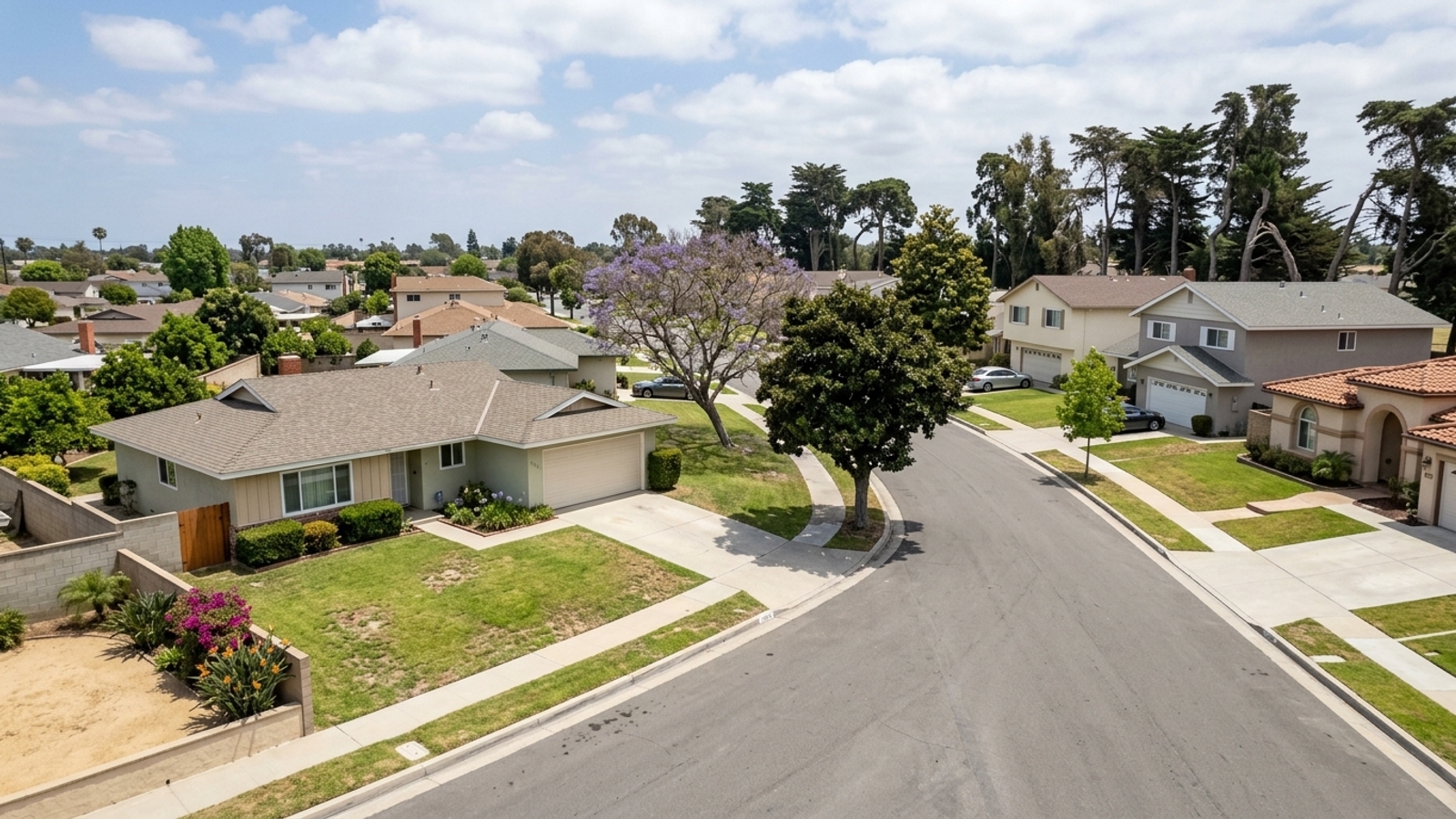
Most of what you'll find here is single-family homes built during the post-war expansion, with some newer townhome developments mixed in. Sellers are seeing strong demand: homes are closing at about 99.98% of list price on average, and roughly 37% of recent sales went above asking.
If you're buying, get your financing sorted before you start touring. At a median price of approximately $1,021,000, the math on monthly payments shifts quickly with rate changes, and homes are generally going under contract in about six weeks. That's not a lot of time to get your ducks in a row after you find something you like.
Historic Sites and Local Architecture
This isn't a town with a preserved Victorian main street or a well-documented historic district. The post-war development moved fast enough that most of the original dairy structures and 19th-century buildings simply disappeared under new construction. If that's what you're looking for, Cypress won't be the right fit.
What the city does have is some notable mid-century civic architecture. The Council Chamber was designed by William L. Pereira and Associates, a prominent architectural firm. It's not officially designated as a historic landmark, but it's a recognizable piece of the city's design story.
Learning About Local Origins
Because the original farmhouses are largely gone, local history survives mainly in civic records and through community organizations. The shift from Dairy City to modern suburb happened fast enough that new construction simply paved over the agricultural footprint before much of it could be documented in place.
Residents curious about the area's past tend to rely on the local Chamber of Commerce and regional Orange County historical groups, which maintain photographs and records covering the Gabrieleno/Tongva tribe, the early Spanish ranchos, and the founding dairy farmers.
What the Area Is Known for Today
Cypress carries real economic weight in Orange County. The city's master-planned business park covers over 800 acres and houses professional and high-end industrial developments that drive a meaningful portion of the local economy.
That's not a minor detail for buyers. Major corporations including Vans, part of VF Outdoor, and Mitsubishi Motors North America operate out of that business park. The concentration of employers draws professionals who then want to live nearby, which is one reason the housing market here stays as competitive as it does.
Famous Faces From Town
The list of notable people connected to Cypress is longer than you'd expect for a city this size. Tiger Woods is the most widely recognized name. Actors John Stamos, Brian Tochi, and Matthew Morrison all have ties to the community. On the sports side, boxer Jerry Quarry, MLB players Troy O'Leary and David Fletcher, and No Doubt drummer Adrian Young are also associated with the town.
Frequently Asked Questions
What is Cypress, CA known for?
Cypress is widely known for its 800-acre master-planned business park, which hosts major corporations like Vans and Mitsubishi Motors North America. Historically, it was famous for its dairy farming industry before transitioning to suburban development.
What county is Cypress, CA in?
Cypress is located in Orange County, California. It sits in the northern part of the county within the greater Los Angeles metropolitan area.
How did Cypress get its name?
The name comes from the Cypress School District, established in 1895. Early residents planted rows of cypress trees around the schoolyard to block the strong Santa Ana winds, and residents officially voted to adopt the name for the city in 1957.
When was Cypress, CA founded?
The municipality was officially incorporated on July 24, 1956. At the time of founding, it was named "Dairy City" to protect local agricultural interests.
Are there any famous people from Cypress?
Yes - the list includes golfer Tiger Woods, actors John Stamos and Matthew Morrison, and MLB players David Fletcher and Troy O'Leary, among others.
What historic landmarks or museums are in Cypress, CA?
There are no widely documented, dedicated historic landmark sites specific to the city. The civic Council Chamber, however, was designed by the notable architectural firm William L. Pereira and Associates.
Is Cypress a city, town, or neighborhood?
Cypress is an incorporated city. It originally incorporated as Dairy City in 1956 before residents voted to change the name the following year.
Check out this article next