
Conversion in progress ...
Please wait while we generate your PDF
What's My Home Actually Worth?
QUICK SUMMARY
What you'll learn in 5 minutes:
- Why Zillow's Zestimate is often wrong by $50,000-$100,000+ (and how it's actually calculated)
- How to read comparable sales like a pro and determine your true market value
- The difference between appraisal value, assessed value, and actual market value (they're not the same thing)
- Which home improvements actually add value and which ones don't move the needle
- How to position your home in the right price band to attract serious buyers
- A self-assessment tool to estimate your home's real value before talking to an agent

You Don't Need an Estimate—You Need the Truth
If you're preparing to sell your Cypress or Orange County home, you've probably already started the mental list: "Should I repaint? Replace the carpet? Update the kitchen? Fix the crack in the driveway?"
If you're thinking about selling, you've probably already done what everyone does: typed your address into Zillow, Redfin, or Realtor.com to see what your home is "worth."
Maybe the number excited you. Maybe it disappointed you. Maybe you got three different estimates and now you're more confused than when you started.
Here's what we need you to understand: Those algorithms are educated guesses based on incomplete data. Your home's actual market value is determined by what a qualified buyer will pay for it today—and that requires human judgment, local expertise, and current market intelligence.
This guide isn't about telling you what you want to hear. It's about helping you understand how valuation actually works so you can price your home correctly, set realistic expectations, and avoid the costly mistakes that come from relying on bad information.
This is for you if:
- You've seen online estimates and you're not sure whether to trust them
- You want to understand how real estate professionals determine value
- You're trying to figure out if your improvements actually increased your home's worth
- You need to know your real number before making decisions about selling
- You're tired of guessing and ready for clarity
START HERE (30 SECONDS)
Find your situation below and jump to the section that matters most:
- "I just want to know what Zillow got wrong about my house" → Jump to "The Zestimate Reality Check"
- "I've done major upgrades and want to know what they're worth" → Go to "What Improvements Actually Add Value"
- "I don't understand how appraisals work or why they matter" → Read "Appraisal vs. Market Value: What's the Difference?"
- "I want to learn how to evaluate comps myself" → Start with "How to Read Comparable Sales Like a Pro"
- "I'm just exploring and want the full picture" → Read straight through
What Most Sellers Get Wrong About Valuation
A seller checks an online estimate. They get excited (or disappointed). They start planning based on that number. They either overprice their home because "Zillow says it's worth this" or underprice it because they don't understand what drives value in their specific neighborhood.
Then reality hits:
Scenario 1: They list at the Zestimate. The home sits. No offers. They reduce the price three times over four months and eventually sell for less than if they'd priced it correctly from day one.
Scenario 2: They assume their online estimate is too high and price below market. The home sells in 48 hours with multiple offers, and they realize afterward they left $30,000-$50,000 on the table.
Both scenarios are expensive mistakes rooted in the same problem: relying on algorithms instead of analysis.
The myth: "Online estimates are pretty accurate these days."
The reality: They're a starting point, not a finish line. And they're often significantly wrong—especially for unique properties, upgraded homes, or in neighborhoods with limited recent sales data.
The Zestimate Reality Check
Let's start by demystifying the number you've probably already looked up.
How Zillow's Zestimate Actually Works
Zillow uses an algorithm that analyzes:
- Public record data (square footage, lot size, bedrooms, bathrooms, year built)
- Tax assessment records
- Recent sales in your area
- Listing history
- Market trends
What it CANNOT account for:
- Your specific upgrades (new kitchen, remodeled bathrooms, new flooring)
- Condition (immaculate vs. deferred maintenance)
- Layout and flow (functional vs. choppy floor plan)
- View, lot position, or privacy
- Curb appeal and presentation
- School boundary nuances within the same zip code
- Neighborhood micro-trends (one street vs. another)
- Current buyer demand for your specific property type
Zillow's Own Accuracy Admission
Zillow publishes its own error rates. For most markets, the Zestimate is within 10% of the actual sale price about 50% of the time.
Translation: Half the time, it could be off by 10% or more.
On a $700,000 home, 10% is $70,000.
That's not a rounding error. That's real money.
When Zestimates Are Most Unreliable
- Unique or custom properties (algorithm relies on "comparable" homes)
- Recently upgraded homes (algorithm doesn't know you renovated)
- Neighborhoods with limited recent sales data
- Markets experiencing rapid shifts (algorithm lags behind real-time changes)
- Homes in transition areas where values vary block by block
When Zestimates Are Somewhat Useful
- Cookie-cutter tract homes with lots of recent comparable sales
- As a rough starting point for initial research
- To track general trends in your neighborhood over time
Bottom line: Use Zestimates as conversation starters, not decision-makers.
How to Read Comparable Sales Like a Pro
This is how real estate professionals actually determine value. And you can do it too.
What "Comparable Sales" Actually Means
A comparable sale (or "comp") is a recently sold property that's similar to yours in:
- Location (same neighborhood or very close)
- Size (within 10-15% of your square footage)
- Bedrooms and bathrooms (same or very close)
- Age and style (similar era and architecture)
- Condition (similar level of updates/maintenance)
The golden rule: The more similar, the more relevant.
The Three-Month Rule
Sales older than 90 days are less relevant because markets shift. In fast-changing markets, even 30-60 days can matter.
Use the most recent sales first, then work backward only if you need more data.
How to Find Your Comps
Option 1: Zillow, Redfin, or Realtor.com "Recently Sold" filters (free but limited detail)
Option 2: Ask a real estate professional for a full CMA (Comparative Market Analysis) with MLS access (most accurate)
How to Adjust Comps for Differences
No two homes are identical. Here's how to think about adjustments:
If a comparable home has BETTER features than yours:
Subtract value from their sale price (they sold for more because they had more to offer)
If a comparable home has WORSE features than yours:
- Add value to their sale price (you should sell for more because you offer more)
Common adjustments:
- Extra bedroom: +$15,000-$30,000 (depending on market)
- Extra bathroom: +$10,000-$25,000
- Garage space: +$10,000-$20,000 per additional car
- Pool: +$15,000-$40,000 (depending on neighborhood and condition)
- Updated kitchen: +$15,000-$50,000 (depending on level of upgrade)
- Updated bathrooms: +$8,000-$20,000 per bathroom
- New flooring throughout: +$10,000-$25,000
- Lot size difference: Varies widely by neighborhood
- View or premium lot: +$20,000-$100,000+ (highly variable)
Warning: These are general ranges. Your specific neighborhood and price point will determine actual value differences.
The Comp Analysis Framework
Step 1: Find 3-5 recent sales (sold within 90 days) that are very similar to your home
Step 2: Note their sale prices
Step 3: Make adjustments for differences (see list above)
Step 4: Calculate the average of your adjusted prices
Step 5: Factor in current market momentum (are prices trending up or down?)
Example:
Your home: 3 bed, 2 bath, 1,800 sq ft, updated kitchen, no pool
Comp 1: 3 bed, 2 bath, 1,750 sq ft, original kitchen, no pool = Sold $680,000
- Adjustment: +$20,000 (your kitchen is better)
- Adjusted value: $700,000
Comp 2: 3 bed, 2 bath, 1,850 sq ft, updated kitchen, pool = Sold $735,000
- Adjustment: -$25,000 (they have pool, you don't)
- Adjusted value: $710,000
Comp 3: 4 bed, 2 bath, 1,900 sq ft, updated kitchen, no pool = Sold $750,000
- Adjustment: -$25,000 (they have extra bedroom)
- Adjusted value: $725,000
Average adjusted value: $711,667
Likely market value range: $700,000-$720,000
BRIDGE: If You're Here Because...
Maybe you've looked at comps and you're still not sure how to account for your specific upgrades. Maybe your neighbor's house just sold and you're wondering why the price seems high or low. Maybe you're trying to figure out if your property tax assessment has anything to do with market value (spoiler: it doesn't).
Here's the truth: Valuation is part science, part art. The science is in the comparable data. The art is in understanding how buyers perceive value in your specific neighborhood at this specific moment.
The framework we're giving you works for any property type, any price point, and any market condition. It's about understanding the relationship between data, perception, and pricing strategy—so you can make informed decisions instead of emotional ones.
Appraisal vs. Market Value: What's the Difference?
This confuses people constantly. Let's clarify.
Market Value = What a Buyer Will Pay
Definition: The price a willing and qualified buyer will actually pay for your home in current market conditions.
Determined by:
- Comparable sales
- Current buyer demand
- Competition (other homes for sale)
- Buyer psychology and emotion
- Marketing and presentation quality
Who determines it: The market (real buyers making real offers)
When it matters most: When you're pricing your home to sell
Appraisal Value = What a Lender Will Finance
Definition: A licensed appraiser's professional opinion of value based on comparable sales and property condition, commissioned by the buyer's lender.
Determined by:
- Comparable sales (similar to market analysis)
- Property condition
- Conservative methodology (appraisers protect lenders)
Who determines it: A licensed appraiser hired by the buyer's lender
When it matters most: After you accept an offer (lender requires it before approving the loan)
Why They Sometimes Differ
Scenario 1: Appraisal comes in low
You accept an offer for $750,000. The appraisal comes back at $730,000.
What happens:
- Buyer's lender will only finance based on $730,000 appraised value
- Buyer must bring an extra $20,000 cash or negotiate price reduction
- Deal might fall apart if buyer can't cover the gap
Why it happens:
- Limited recent comparable sales
- Appraiser uses conservative methodology
- Market is moving faster than appraisal data reflects
- Property has unique features appraisers can't easily value
Scenario 2: Appraisal matches or exceeds offer
Everything proceeds smoothly. This is the goal.
What Improvements Actually Add Value (And What Doesn't)
This is where sellers lose the most money—either by over-improving or by not understanding how improvements translate to sale price.
The ROI Reality
Most home improvements return 50-80% of their cost at resale.
That $50,000 kitchen remodel? It might add $30,000-$40,000 to your sale price.
That $15,000 bathroom renovation? Probably adds $10,000-$12,000.
Exception: Strategic improvements in the right price range can return 100%+ by expanding your buyer pool from "fixers" to "move-in ready" shoppers.
HIGH-VALUE IMPROVEMENTS (70-100%+ ROI)
Kitchen Updates (Strategic, Not Full Remodel):
- Modern countertops (quartz, granite): 70-90% ROI
- Updated cabinets (paint or reface, not replace): 75-95% ROI
- New appliances (stainless, modern): 60-80% ROI
- New backsplash: 70-90% ROI
Why it works: Kitchen condition is the #1 factor buyers evaluate
Bathroom Updates (Refresh, Not Gut):
- New vanity and fixtures: 70-85% ROI
- Tile refresh (tub surround, floor): 65-80% ROI
- Modern lighting and mirrors: 75-90% ROI
Why it works: Bathrooms signal overall maintenance and cleanliness
Flooring (When Needed):
- Replacing worn carpet with new carpet: 80-100% ROI
- Replacing carpet with hardwood/luxury vinyl: 70-90% ROI
- Refinishing existing hardwood: 85-100% ROI
Why it works: Flooring impacts every room; worn flooring screams "fixer-upper"
Fresh Paint (Interior):
- Professional paint in neutral colors: 100-200% ROI
Why it works: Single highest ROI improvement; makes everything look better
MEDIUM-VALUE IMPROVEMENTS (40-70% ROI)
Major Kitchen Remodel:
- Full gut and rebuild: 40-60% ROI
Why lower ROI: Expensive, and buyer taste is subjective
Major Bathroom Remodel:
- Full renovation: 50-70% ROI
Why lower ROI: High cost, moderate value add in most price ranges
HVAC Replacement:
- New AC/heating system: 40-60% ROI
Why lower ROI: Buyers expect functional systems; "new" is a small bonus
Roof Replacement:
- New roof: 50-70% ROI
Why lower ROI: Like HVAC, buyers expect a functional roof; replacing it doesn't add premium value, but NOT replacing a bad roof kills deals
Windows Replacement:
- New dual-pane windows: 50-70% ROI
Why lower ROI: High cost, moderate buyer perception impact
LOW-VALUE IMPROVEMENTS (Under 50% ROI)
Swimming Pool Addition:
- In-ground pool: 30-50% ROI (sometimes zero if buyer doesn't want it)
Why low ROI: Polarizing feature; maintenance burden for many buyers
High-End Appliances:
- Luxury upgrades beyond neighborhood norm: 20-40% ROI
Why low ROI: Buyers care that appliances are modern and functional, not that they're Sub-Zero
Home Office Build-Out:
- Custom built-ins, dedicated office space: 30-50% ROI
Why low ROI: Many buyers want flexibility in room usage
Sunroom/Addition:
- Adding square footage: 40-60% ROI (highly variable)
Why low ROI: High cost, doesn't always match home's style or flow
Basement Finishing (Rare in CA):
- Not applicable to most Orange County properties
The Improvement Decision Framework
Before you invest in ANY improvement, ask:
- Will this expand my buyer pool? (Worn carpet → yes; luxury appliances → no)
- Is this appropriate for my neighborhood? ($100K kitchen in a $500K neighborhood → no)
- Am I doing this because I'd enjoy it or because buyers want it? (Buyers don't care about your preferences)
- What's the actual return if I sell in the next 1-2 years? (Run the math; most improvements don't pay for themselves)
Better question: "Should I improve this, or price my home to reflect as-is condition and let the buyer customize it their way?"
Often the second option is smarter.
Understanding Price Bands (And Why They Matter)
Price bands determine which buyers see your home. Price it wrong and you're marketing to the wrong audience.
How Buyers Search Online
Most buyers set price filters in $25,000-$50,000 increments:
- Under $600,000
- $600,000-$650,000
- $650,000-$700,000
- $700,000-$750,000
If you price at $651,000 instead of $649,000, you disappear from the "under $650K" searches.
The Strategic Pricing Principle
Price just under a major threshold to maximize visibility.
Example:
Your home's true value: $640,000-$660,000
- Option 1: Price at $659,000 (captures both $600-650K and $650-700K buyers)
- Option 2: Price at $649,000 (captures $600-650K buyers + creates urgency with "great deal" perception)
- Option 3: Price at $665,000 (only captures $650-700K buyers; limits pool)
Best strategy: Option 2 if you want fast sale with multiple offers; Option 1 if you want to test higher price first.
The Over-Pricing Trap
What happens when you price too high:
Week 1-2: Minimal showings (priced out of the active buyer pool)
Week 3-4: Price reduction #1 (now you're "the house that didn't sell")
Week 5-8: Still sitting (buyers wonder what's wrong with it)
Week 9: Price reduction #2 (now you're "the desperate seller")
Final sale price: 5-10% below where you should have priced initially.
The data is clear: Homes priced correctly from day one sell for more and faster than homes that start high and chase the market down.
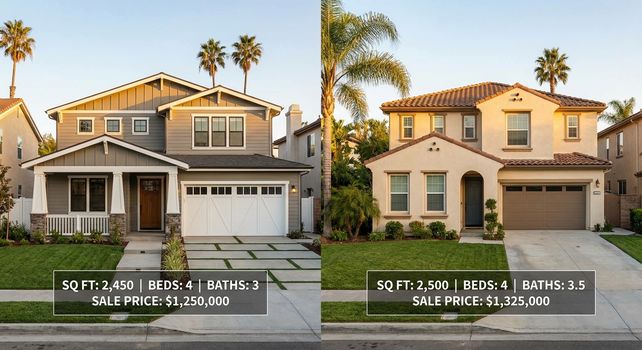
PATH 1: The "I've Done Major Upgrades" Seller
Your situation: You've invested $50,000-$100,000+ in renovations and you want to know what it's worth.
The Upgrade Valuation Framework
Step 1: Calculate your total investment
Add up everything:
- Kitchen remodel
- Bathroom updates
- Flooring
- Paint
- Landscaping
- HVAC, roof, windows
- Any other improvements
Step 2: Determine your baseline value
What would your home be worth WITHOUT the upgrades?
Look at comparable sales of homes in original condition. That's your starting point.
Step 3: Apply realistic ROI percentages
Use the improvement ROI guide above. Most upgrades return 50-80%.
If you spent $75,000 total, expect $40,000-$60,000 in added value (not $75,000).
Step 4: Compare to updated comps
Find homes that sold recently with similar upgrades. Their sale prices validate (or challenge) your calculations.
Common Mistakes Upgraded Home Sellers Make
Mistake 1: "I spent $80K, so I should get $80K more than my neighbor's house sold for."
Reality: You'll get 50-70% of that, and only if buyers value your choices.
Mistake 2: "My upgrades are nicer than the comps, so I can price higher."
Reality: Buyers have budgets. If you price outside the range for your neighborhood, you'll get zero showings—regardless of how nice your upgrades are.
Mistake 3: "I have the nicest house on the block, so I deserve a premium."
Reality: You might be the nicest house, but you're still constrained by neighborhood comps. Over-improving for the neighborhood is a losing investment.
When Upgrades Justify Premium Pricing
You CAN price at the top of the range (or slightly above) if:
- Your upgrades are EXACTLY what buyers in your price range want (modern kitchen, updated baths, new flooring)
- Comparable homes are outdated or in poor condition (you're the best option available)
- Inventory is low and buyer demand is high (competitive market)
- You're willing to wait for the right buyer who values your specific upgrades
You CANNOT price above range if:
- You over-improved for the neighborhood
- Your upgrades reflect personal taste (bold colors, unique styles)
- Comparable updated homes already set the ceiling
- Buyers have multiple updated options to choose from
PATH 2: The "How Do I Self-Assess?" Seller
Your situation: You want to estimate your value yourself before talking to a real estate professional.
The DIY Valuation Process
Step 1: Gather Your Home's Basic Info
- Square footage (from tax records or prior listing)
- Bedrooms and bathrooms
- Lot size
- Year built
- Major features (pool, garage, view, etc.)
Step 2: Find 5-7 Recent Comparable Sales
Use Zillow, Redfin, or Realtor.com:
- Same neighborhood (within 0.5 miles ideally)
- Sold within last 90 days
- Similar size (within 200-300 sq ft)
- Same bed/bath count (or very close)
Step 3: Calculate Price Per Square Foot
For each comp: Sale Price ÷ Square Footage = Price per Sq Ft
Example: $720,000 ÷ 1,800 sq ft = $400/sq ft
Step 4: Find the Average
Add all price-per-sq-ft numbers, divide by number of comps.
Step 5: Multiply by YOUR Square Footage
Average price per sq ft × Your sq ft = Baseline estimate
Step 6: Adjust for Major Differences
- Better condition/upgrades: +3-8%
- Worse condition: -5-10%
- Premium lot/view: +5-15%
- Negative factors (busy street, etc.): -3-7%
Step 7: Validate Your Number
Does your estimate fall within the range of your comps? If you're 10%+ higher or lower, recheck your adjustments.
When DIY Valuation Works Well
- Cookie-cutter neighborhood with lots of recent sales
- Your home is very similar to comps
- You're just exploring (not making final pricing decisions)
When You Need Professional Input
- Unique property with few comparables
- Major upgrades or condition differences
- Rapidly changing market
- You're actually ready to list (pricing matters too much to guess)
PATH 3: The "My Neighbor Just Sold" Scenario
Your situation: A house on your street just sold and you're using it to estimate your value.
The Neighbor Comp Framework
Good news: Your neighbor's sale is highly relevant (same street, same market timing, similar buyer pool).
Important adjustments to consider:
Is your home bigger or smaller?
- Calculate price per sq ft, then multiply by YOUR square footage
Is your condition better or worse?
- Updated vs. original kitchen/baths
- Flooring condition
- Overall maintenance level
Is your lot better or worse?
- Larger/smaller yard
- Better/worse position (corner, cul-de-sac, view, etc.)
- Privacy differences
Do you have features they don't (or vice versa)?
- Pool, garage space, extra rooms, etc.
Example:
Your neighbor sold for $750,000
- Their home: 2,000 sq ft, original kitchen, standard lot
- Your home: 1,850 sq ft, updated kitchen, premium corner lot
Calculation:
- Their price per sq ft: $750,000 ÷ 2,000 = $375/sq ft
- Your baseline: $375 × 1,850 = $693,750
- Adjustment for updated kitchen: +$25,000
- Adjustment for corner lot: +$15,000
- Your estimated value: $733,750
When Your Neighbor's Sale Is Misleading
Be cautious if:
- They had a bidding war (anomaly, not norm)
- They sold to a family member or off-market (non-arm's-length transaction)
- Their home had unique features yours doesn't
- Market shifted significantly since their sale (even 60-90 days can matter)
Bottom line: Use your neighbor's sale as one data point, not the only data point.
PATH 4: The "I Just Want the Bottom Line" Seller
Your situation: You don't want to do the analysis yourself. You want an expert to tell you the number.
What to Expect from a Professional CMA (Comparative Market Analysis)
When you request a market valuation from a real estate professional, here's what you should receive:
A comprehensive report including:
- 5-10 comparable sales with photos and details
- Adjustments for differences between comps and your home
- Current active listings (your competition)
- Analysis of market trends in your neighborhood
- Recommended listing price range (not just one number)
- Marketing strategy tied to that price
What you should NOT receive:
- A number pulled from thin air to make you happy
- Overly optimistic pricing to win your business
- Generic pricing without property-specific analysis
How to Evaluate Whether You're Getting Good Advice
Red flags:
- Agent prices your home 10%+ above recent comps without clear justification
- Agent says "Let's try this price and see what happens"
- Agent doesn't show you the comparable data
- Price recommendation is based on what you "need" to net, not market reality
Green flags:
- Agent shows you specific comparable sales with adjustments
- Agent explains their pricing strategy (price band positioning, market timing, etc.)
- Agent is willing to have an honest conversation even if the number disappoints you
- Agent provides a range, not just one number, and explains the tradeoffs

Self-Assessment: How Accurate Is Your Current Value Estimate?
Answer these questions honestly:
ABOUT YOUR KNOWLEDGE:
- I've reviewed at least 5 comparable sales from the last 90 days
- I understand the difference between market value and assessed value
- I've accounted for condition differences between my home and comps
- I understand which of my improvements add value (and which don't)
- I know which price band my home falls into
ABOUT YOUR HOME:
- My home is in similar or better condition than recent comparable sales
- My upgrades are appropriate for my neighborhood and price range
- I have realistic expectations about what my improvements are worth
- I'm willing to price based on data, not emotion or "what I need to net"
ABOUT YOUR READINESS:
- I'm prepared to hear a number that might be different from my estimate
- I understand that overpricing costs me more than underpricing
- I'm ready to price competitively to generate buyer interest
- I value accuracy over optimism when it comes to pricing
If you checked 10+ boxes: You have a solid foundation for understanding your home's value.
If you checked 6-9 boxes: You'd benefit from professional input to validate your assumptions.
If you checked fewer than 6 boxes: Schedule a strategy call—you need expert analysis before making pricing decisions.
What to Do This Week
Based on your self-assessment, here's your action plan:
IF YOU WANT TO EXPLORE ON YOUR OWN FIRST:
- Pull recent comparable sales for your neighborhood (Zillow, Redfin, Realtor.com)
- Calculate price per square foot for 5-7 comps and find the average
- Make adjustments for condition, features, and lot differences
- Arrive at a preliminary range (not one exact number)
- Validate with professional input before making any commitments
IF YOU WANT PROFESSIONAL ANALYSIS NOW:
- Schedule a strategy call to receive a comprehensive CMA
- Prepare questions about your specific upgrades and how they impact value
- Be ready to discuss your timeline and goals (this affects pricing strategy)
- Get clarity on the difference between your estimated value and actual market value
IF YOU'RE CURIOUS BUT NOT READY TO SELL:
- Track your neighborhood sales over the next 3-6 months
- Learn the comp analysis process so you understand valuation fundamentals
- Revisit this guide when you're closer to making a decision
- Know your baseline so you can make informed choices when the time comes
Let's Determine Your Home's Real Value
Here's the reality: Online estimates are useful for curiosity, but when it comes to actually pricing your home to sell, you need analysis rooted in current market data, neighborhood expertise, and strategic positioning.
That's what a professional CMA provides—and it's what we do for every seller we work with in Cypress, Anaheim, Buena Park, La Palma, and throughout Orange County.
On a strategy call, we'll:
- Run a comprehensive comparable sales analysis specific to your property
- Walk through each comp and explain the adjustments (so you understand the "why" behind the number)
- Give you an honest value range—not an inflated number to win your business
- Explain our pricing strategy and how we position homes to sell fast and for top dollar
- Answer your questions about upgrades, condition, and market timing
No pressure. No obligation. Just the truth about what your home is worth and what it takes to sell it successfully.
We've valued hundreds of homes across Orange County. We know the neighborhoods, the buyer expectations at every price point, and the positioning strategies that work. And we'll give you the same straight-talk analysis we'd want if we were in your shoes.
READY TO KNOW YOUR HOME'S REAL VALUE?
What happens on the call:
- 20-30 minutes of focused analysis on your specific property
- Detailed comparable sales review with our expert adjustments and insights
- Honest pricing recommendation with strategic reasoning behind it
- Clear explanation of how your upgrades and condition impact value
No sales pitch. No pressure. Just the information you need to make smart decisions about your home.
If you're thinking about selling in Cypress, Anaheim, Buena Park, La Palma, or anywhere in Orange County, we'd love to give you the clarity you deserve.
Our family helping yours, since 1996.